Thursday, May 23, 2013

Project Improvements and Post-Mortem

Click to Enlarge

References:
http://www.nmhc.org/Content/ContentList.cfm?NavID=75
http://www.sciencedirect.com/science/article/pii/S037877881100524X
http://www.nyc.gov/html/dcp/html/census/demo_maps_2010.shtml
http://www.city-data.com/nbmaps/neigh-Brooklyn-New-York.html
http://globaleconomicanalysis.blogspot.com/2011/11/country-by-country-per-capita-retail.html
http://www.eia.gov/tools/faqs/faq.cfm?id=447&t=3
http://www.nationalgridus.com/non_html/shared_energyeff_groceries.pdf
http://www.touchstoneenergy.com/efficiency/bea/Documents/Retail.pdf
http://www.eia.gov/electricity/data.cfm#summary

Ultimately I wasn't very satisfied with how the project turned out. I think I had a clear vision for what I wanted to do, but the execution was lacking. I did not have the technical ability with drawing, photoshop, blender, etc... to create the visualization I wanted.

Looking back, I think I would have reframed my system to better fit my ability to create visual works. I wanted to make a cityscape that simulated a viewer looking down from a skyscraper onto a city, but it turned out to be much more difficult than I thought it would be to actually make a convincing sketch of this visual effect. After several failed attempts, both using computer graphics and hand sketches, I decided to fall back onto my old drawing.

Ideally I would have been able to integrate much more data into the drawing to make it more engaging, but I was unable to simply because of how difficult it was for me to work with pencil and paper.

Friday, May 10, 2013

Final Visualization


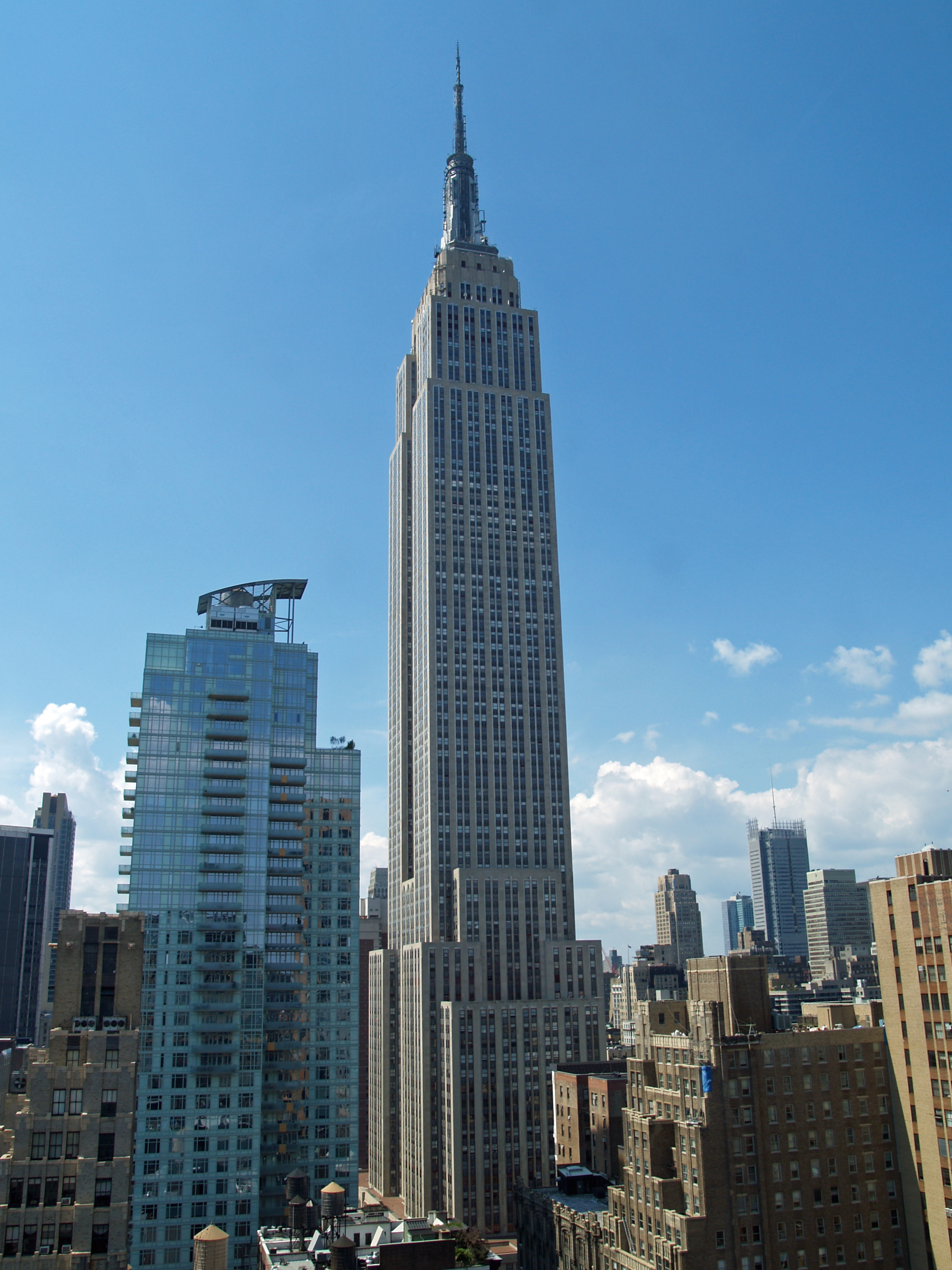
Imagine you're on the top of the empire state building


Imagine all 21,000 workers and their families all lived in the same place next to the building, forming a self-sustaining community. What would you see?


The skyscraper is truly a monument to our ability to work together and congregate.


Friday, May 3, 2013

More Sketches

I didn't actually like the look of top-down isometric, here's an alternative view that I liked:


This is kind of loosely inspired by http://xkcd.com/1110/, xkcd's "Click and Drag".

Also, a systems diagram:


Friday, April 26, 2013

Rough Sketch in SimCity

SimCity was actually a major inspiration for this project. Here is a first draft of what I want to show.


Friday, April 12, 2013

Introduction to Skyscrapers

What is a Skyscraper? There is no universally accepted definition for a skyscraper, but to quote United States Supreme Court Justice Potter Stewart, "I know it when I see it". I personally like the criteria that The Council on Tall Buildings and Urban Habitat (CTBUH, http://www.ctbuh.org/) set: Height relative to context (does the building tower over the skyline?), proportion (is the building tall and pointy?), and tall building technologies (does the building have elevators and wind bracing?). If a building satisfies one or more of the criteria, it is considered a Tall Building.

In particular, I will be focusing on skyscrapers in aggregate across well-developed U.S. cities, probably around 60 stories high. An increasing number of people are moving to cities, and recently the number of people living in cities has surpassed the number of people not.

from http://web.worldbank.org/WBSITE/EXTERNAL/TOPICS/EXTSDNET/0,,contentMDK:22816322~menuPK:64885113~pagePK:7278667~piPK:64911824~theSitePK:5929282,00.html


Now that definitions are out of the way, on to the interesting parts: Skyscrapers reach into more than just sky.

Skyscrapers require a complex network of support for their construction and day-to-day operation. Their influence extends far beyond a city block or skyline; they bring jobs, house people, use power and water, and consume resources. With today's increasing urbanization, we need to take a closer look at how skyscrapers affect their local communities and the world at large.

A matrix showing interconnections between systems surrounding skyscrapers

To visualize the complex system surrounding a skyscraper, I will use the visual metaphor of a small city and its outlying areas. The message to take away is that a skyscraper requires many systems to support their construction and daily operations that take up land and resources, i.e. high-density urbanization has land use and resource costs that aren't immediately evident.

The primary emotion I want people to feel small when viewing the visualization to give them a sense of scale. I also want to make people connect with a human presence in the small city (i.e. by showing people or families in the city), as well as possibly a sense of shame for not considering the impact their own living spaces have on similar systems.

Systems Visualization

This is the first in a series of posts for a project I'm doing for a class I'm taking at MIT this semester, Systems Visualization (CMS.631). The world around us is much more complex than we can see at first glance. Systems visualization is an important tool for coping with this complexity by giving us the ability to see and appreciate complex interconnections between systems we study.

 What is a System?

A system is a general term used to describe something composed of different parts, which usually interact with each other. Common examples of systems include the human body (which is composed of tissues and organs which interact to keep us alive) and the internet (which is composed of a vast network of interconnected computers and routers). However, systems do not have to be composed of physically connected parts, and usually do not have well-defined boundaries. The parts and boundaries we choose usually reflect what we are interested in studying. For example, the food service industry could be broken down in multiple ways; if we were interested in human-human interaction, we could look at a system composed of customers, servers, chefs, and managers, and if we were interested in food safety, we could look at a system composed of consumers, chefs, cooking equipment, raw food, and cooked food.

What is Systems Visualization?

Systems visualization is a way of representing a system using images and text. These graphics can be very powerful, conveying information and complexity with a few simple visual metaphors. They can come in the form of pictures, infographics, charts, or even a couple of words arrayed spatially.

"The Friend Zone" - breaking down the feels

Systems visualization differs from data visualization by focusing on abstract concepts and the connections between them. While histograms or pie charts can convey quantitative information well, they cannot show relational information or semantic (contextual) information well. Systems visualization crosses the boundary between technical visualization and artistic interpretation to give viewers an intuitive sense and understanding of something that normally is very difficult to appreciate or understand all at once.


Interactions between systems of systems

My goal with this project is to create a visual that will communicate a complex system with clarity and agency - to make you care and understand how deep and vast the interconnections are in the world around us.